
Best prices Special offers for members of the PWE book club The cheapest delivery

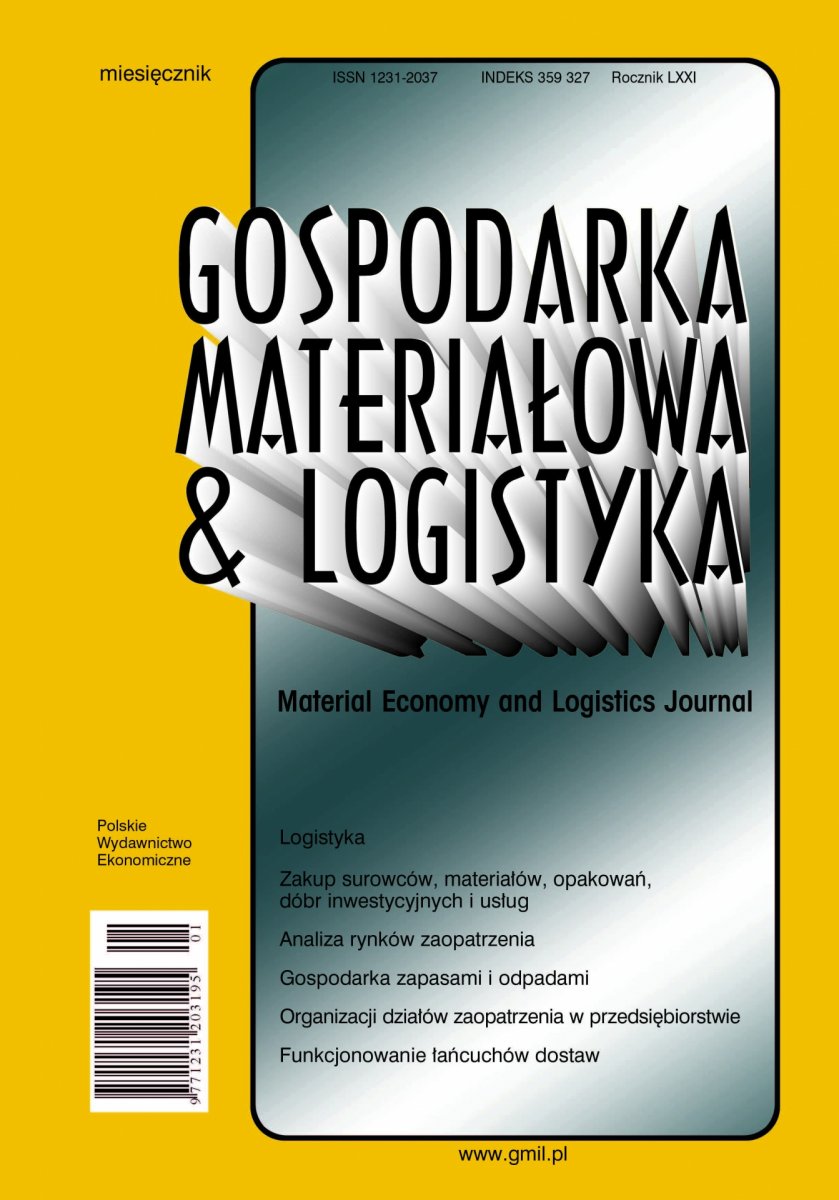
Material Economy and Logistics 04/2025

ISSN: 1231-2037
Pages: 46
Publication date: 2025
Place publication: Warszawa
Binding: paperback
Format: A4
Article price
As file to download
5.00
Buy article
29.00
DOI: 10.33226/1231-2037.2025.4.1
JEL: Q53

The aim of this article is to present the issue of construction and demolition waste (CDW) management, particularly waste originating from road infrastructure. The analysis was conducted in the context of growing environmental challenges such as the degradation of natural resources and the need to reuse waste materials in connection with the transition to a circular economy (CE). The study analysed the essence of the waste management hierarchy where recycling takes precedence over disposal. The article also analysed the current legal and technological situation and indicated directions for development that will allow for the effective and environmentally friendly management of this group of waste.

Keywords: construction and demolition waste; circular economy; waste management hierarchy; asphalt waste management
Download article
DOI: 10.33226/1231-2037.2025.4.2
JEL: O13, O44, Q53, Q56

This article examines the impact of recent and upcoming legal reforms on the logistical operations of Poland’s waste management system in 2025, with a forward-looking perspective toward 2026. It provides an overview of the current structure of the national waste management framework and outlines the key legislative developments shaping its evolution. Particular attention is given to regulatory changes affecting the management of clothing, footwear, and textile waste, as well as the planned implementation of a deposit-refund system for reusable packaging. Due to the lack of comprehensive studies addressing the issue of changes in the waste management system, this article is based primarily on legal regulations and publicly available data obtained from the official websites of Polish public institutions and organizations concerned with environmental protection and natural resources. This article serves as an introduction to further research analysing the functioning of the national waste management system.

Keywords: waste; waste management logistics; sustainable development
Download article
DOI: 10.33226/1231-2037.2025.4.3
JEL: D3, L9

A cold chain is a system that ensures the maintenance of a constant and controlled temperature during the production, storage, and transport of thermally sensitive products to the end user. The cold chain ensures the quality and freshness of products that can spoil under unsuitable conditions, and applies to food and pharmaceutical products, among others. The considerations undertaken in the article were aimed at finding an answer to the question that constitutes the research problem: How does safety management in the Ulmer cold chain influence the maintenance of a constant temperature, health safety and quality of transported products? The hypothesis was formulated as follows: Effective safety management in Ulmer’s cold chain has a significant impact on maintaining the quality and health safety of transported products. The article utilizes theoretical research methods such as analysis, synthesis, and inference, as well as an empirical case study approach. The article’s introduction defines the nature of the cold chain and describes the company. It then presents potential threats within the cold chain and outlines preventive measures in this area. The final section of the article contains conclusions. The article is based on publicly available literature and materials provided by Ulmer.

Keywords: cold chain; refrigeration line; frozen food and its storage; food safety
Download article
DOI: 10.33226/1231-2037.2025.4.4
JEL: R40, M20, M10

The article presents the results of research on the degree of influence of a well-designed and integrated supply chain, effectively managed in line with the overall strategy of the company, on business success. The article consists of three parts. The first part highlights the importance of supply chains in achieving business success. The second part contains the results of research relating to key processes in supply chain management. The third part presents the role of technology in supply chain management. The research problem and the objective of the study determined the structure and content of the article and, consequently, the nature and content of the postulates presented in the summary.

Keywords: management; supply chain; process; business success; threats; security; sustainability; strategy; design; risk
Download article
DOI: 10.33226/1231-2037.2025.4.5
JEL: F50, H56, D83, L86

In an age of Logistics 4.0, information security in logistics is essential for both efficiency and resilience of enterprises. The aim of this article is to evaluate the importance of information security in logistics processes by identifying and analysing key threats, as well as assessing the role of standards, legal regulations, and modern technologies in shaping the directions of information security development and building the resilience of logistics systems. This article summarizes the major information-security threats faced by the TSL industry, from sophisticated cyberattacks and infrastructure failures to human mistakes and errors, and the challenges of cooperating with external partners. Recommendations for integrating security systems, implementing innovative technological solutions, and improving employee digital competencies are made in light of literature review and practical examples. The above article serves as both a briefing as well as an instructive manual to know more on how to construct secure and well-resilient logistics systems.

Keywords: information security; Logistics 4.0; risk management; business continuity; digital technologies
Download article
Odbiór osobisty 0 €
Inpost Paczkomaty 3 €
Kurier Inpost 3 €
Kurier FedEX 3 €
Free delivery in Reader's Club from 47 €