Best prices Special offers for members of the PWE book club The cheapest delivery

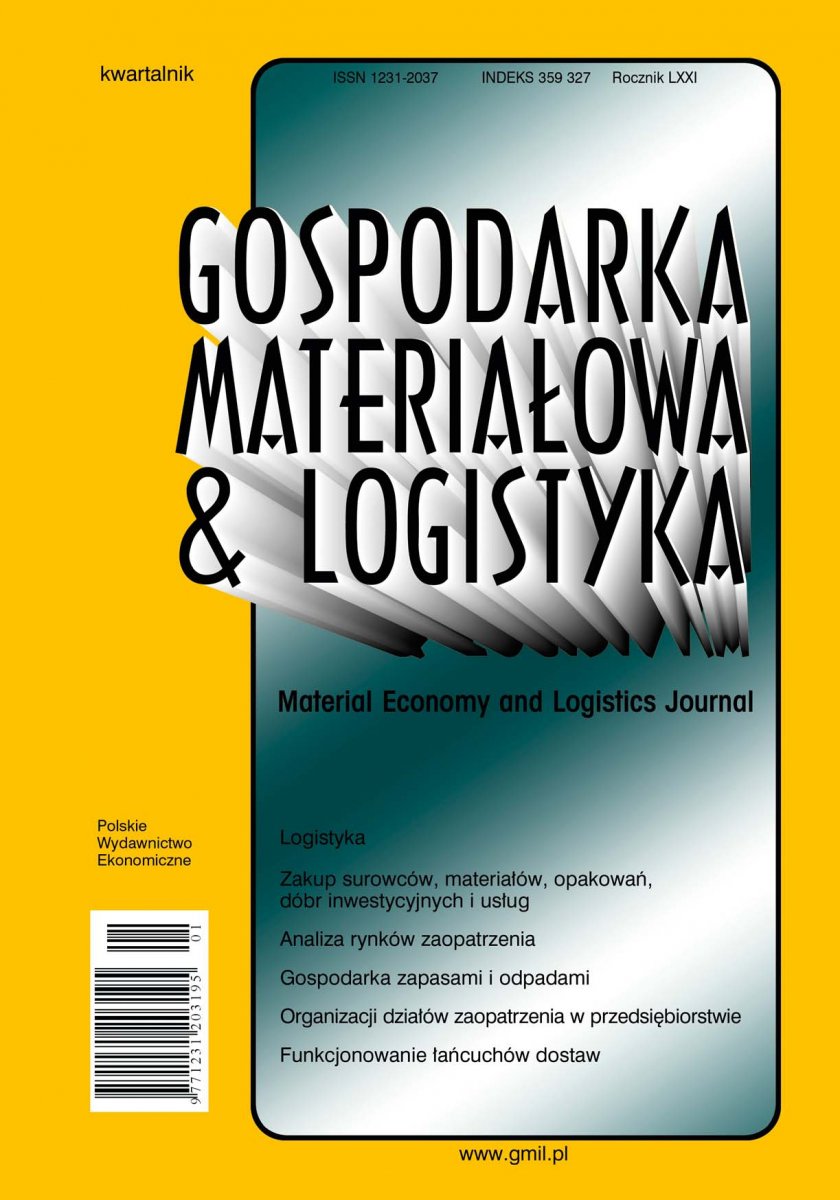
Material Economy and Logistics 02/2026

ISSN: 1231-2037
Pages: 59
Publication date: 2026
Place publication: Warszawa
Binding: paperback
Format: A4
Download the magazine
DOI: 10.33226/1231-2037.2026.2.1
JEL: Q31, Q42

The energy transition is one of the most significant challenges facing the modern economy, influencing the structure of energy resource use and the development of renewable energy sources (RES). The purpose of this study is to analyse changes in coal and gas consumption in electricity and heat production in Poland and to assess the growth trends of renewable energy sources over the past 25 years. The study is based on statistical data analysis concerning the national energy sector, including: the volume of fossil fuel consumption, energy production from RES, and carbon dioxide emissions. In addition, the study uses expert knowledge to identify clusters within the fuel and energy sector, presenting them in the context of carbon emissions (Cluster 1 – period 2000–2008, Cluster 2 – period 2009–2015, Cluster 3 – period 2016–2020, and Cluster 4 – period 2021–2024). The analysis allows for determining the direction and pace of the energy transition in Poland, pointing to a gradual reduction in the role of coal as the primary energy source, accompanied by a rise in the importance of renewable energy sources. The study’s findings enable an assessment of the effectiveness of ongoing transition measures and the identification of key trends influencing the sustainable development of Poland’s fuel and energy sector.

Keywords: energy transition; renewable energy sources (RES); fossil fuels; carbon emissions (CO2)
Download article
DOI: 10.33226/1231-2037.2026.2.2
JEL: R40

The aim of this article is to present and assess key aspects of the economic situation of transport and warehousing enterprises. The article begins with a presentation of the external conditions of the enterprises’ operations, followed by an assessment of their material performance, revenue and financial results, and profitability. Current assets, their dynamics and structure, the level of financial liquidity and enterprise investments are also assessed. The article concludes with a concise assessment of the economic situation.

Keywords: freight transport; revenues; financial results; profitability; current assets; financial liquidity; capital expenditures
Download article
DOI: 10.33226/1231-2037.2026.2.3
JEL: J24, L14, M12, M54

The aim of the article is to determine the impact of approaches, models, and strategies for competency management of logistics personnel adopted by the supply chain leader on the relationships between the entities forming the links of the chain. The article is divided into two parts. The first part contains theoretical considerations regarding the approach to competency management of logistics personnel adopted by the supply chain leader, in correlation with relationships within the supply chain. The second part presents the results of the author’s original survey research. The empirical research was conducted from June 2024 to September 2025 in ten supply chains operating across five industries: pharmaceutical, food, construction, automotive, and energy. In each of the industries, two purposefully selected supply chains were studied. In selecting metalogistics systems, the author was guided by the criterion of competency management implemented by the enterprise acting as the leader in the supply chain. The research was carried out using the author’s survey questionnaire divided into four parts concerning: supply chain relationships, logistics competencies of the supply chain, competencies of logistics personnel, and management of those competencies by the supply chain leader. The conclusions drawn from this study may be used not only for further empirical research on the impact of approaches to competency management on relationships within the supply chain, but also as recommendations for logistics managers.

Keywords: supply chain; logistics personnel; logistics competency; logistics competency management models; logistics competency management strategies

Download article
DOI: 10.33226/1231-2037.2026.2.4
JEL: A12, L81, Q55

Trade in Poland has been changing dynamically for many years. Due to growing access to the Internet e-commerce is playing an increasingly important role. Along with the growing number of transactions, the dynamic development is noted in logistics, without which no type of trade could exist. This primarily refers to distribution logistics (product transportation) as well as the flow of information, which, thanks to the Internet, quickly reaches the customer from the seller. This article focuses on the Allegro e-commerce platform, one of the leaders in online sales in Poland. Growing user expectations regarding order fulfilment speed, on-time deliveries, and the ability to choose a convenient delivery method have led Allegro to develop its own logistics network, Allegro One, which aims to streamline and optimize distribution processes. This study presents an analysis of the logistics processes in the area of distribution used in e-commerce on the Allegro sales platform, as well as directions for their development in the electronic distribution channel, taking into account the assumptions and prospects of the entity under study. The purpose of this article is to assess the impact of the Allegro One logistics network on the efficiency of distribution processes within the Allegro platform. The main research question of this article is “How does the Allegro One logistics network affect the efficiency of distribution processes within the Allegro platform?”.

Keywords: e-commerce; distribution logistics; logistics customer service; logistics process efficiency; courier services
Download article
DOI: 10.33226/1231-2037.2026.2.5
JEL: C61, L91, R41

The paper presents the results of research, conducted as part of an R&D project, aimed at developing an effective algorithm for solving the optimization problem – the Team Orienteering Problem with Time Windows (TOPTW). The study compared the results of two original solutions for TOPTW regarding their economic and operational efficiency when applied to optimize transport order fulfillment in the last mile segment. The hypothesis regarding the higher effectiveness of the Ant Colony Optimization (ACO) algorithm over the Genetic Algorithm in the context of transport economics was verified. The test results for both developed algorithms on classical benchmark instances were presented in the paper. The implementation of profit-oriented route optimization algorithms, solving the TOPTW problem, constitutes a key factor in reducing operational costs in urban logistics. The conducted studies unequivocally confirmed the higher quality of solutions generated by ACO. The research results formed the basis for selecting the ACO algorithm for implementation in the commercial TMS system (Transport Management System), the AutoHiver for optimal transport order management.

Keywords: transport management system; ant colony optimization; genetic algorithm; transport economics; last mile delivery
Download article
Odbiór osobisty 0 €
Inpost Paczkomaty 3 €
Kurier Inpost 3 €
Kurier FedEX 3 €
Free delivery in Reader's Club from 47 €